
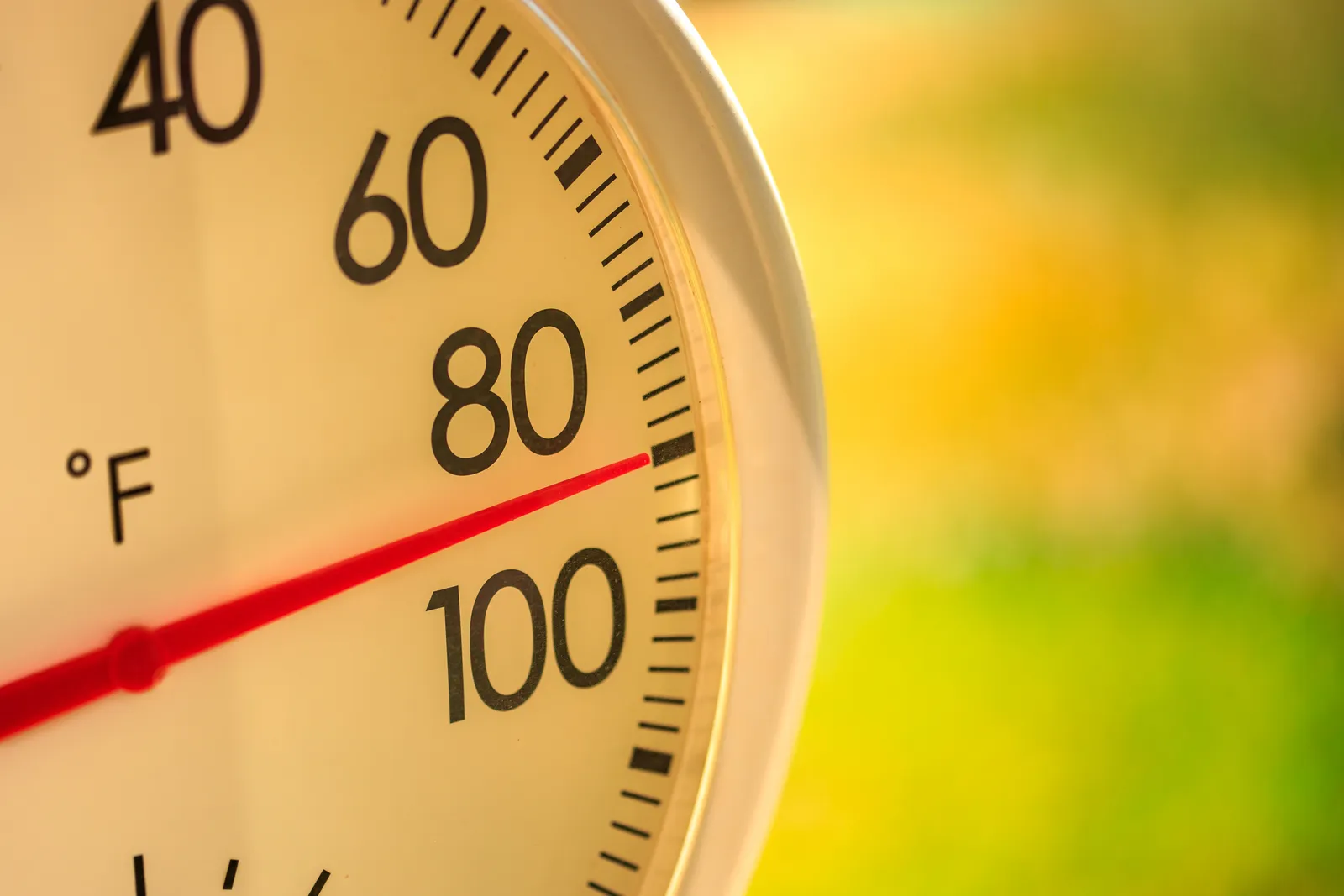
Summer HVAC Prep in North Jersey: What to Do Before the First 90-Degree Weekend
The first real heat wave in North Jersey usually shows up the same way every year.
A stretch of pleasant 70s, then a Friday afternoon where it jumps to 91 degrees with the kind of sticky air that fogs up your windows from the inside. That's the moment a lot of homeowners flip the thermostat to cool for the first time since September.
And that's when the calls start coming in.
Summer HVAC prep is the difference between a system that handles July without complaint and one that quits on you during the hottest weekend of the year. If your AC sat untouched all winter, it doesn't owe you a smooth startup.
Here's what's been happening to your system over the last eight months:
Dust settles on coils
Capacitors weaken
Refrigerant levels drift
Condensate lines clog with whatever found its way in over eight months of sitting still
By the time you notice warm air coming out of the vents, every other homeowner in Passaic and Bergen County is calling for help, and the wait list is already a week deep.
Here's how to get ahead of it. This is the order we'd run through if it were our own house, starting with what matters most.
Step One: Book the Spring AC Tune-Up Now, Not in June
A spring AC tune-up is the single highest-value thing you can do before summer. It's also the thing most people put off until the system is already struggling.
A real tune-up is not a glance and a handshake. A technician should be:
Cleaning the outdoor condenser coils
Checking refrigerant pressure
Testing the capacitor and contactor
Tightening electrical connections
Flushing the condensate drain
Verifying the temperature drop across the evaporator coil
That last one tells you whether the system is actually pulling heat out of your air the way it's supposed to.
Pricing in this post reflects 2026 North Jersey averages and will shift over time.
In New Jersey, a standard AC tune-up runs roughly $100 to $200 depending on the contractor and what the system needs. Skip it for a few years and you're looking at compressor failure, frozen coils, or a full replacement that runs $7,000 and up.
The math isn't subtle.
Spring slots fill fast. By Memorial Day weekend, most reputable shops in North Jersey are booking two to three weeks out for non-emergency work. Schedule in March or April if you can.
Step Two: Walk the House and Check the Filter
While you're waiting for that appointment, do the easy stuff yourself.
Change the Filter
If you can't remember the last time, change it. A clogged filter strangles airflow, makes the blower work harder, and pushes more dust into your evaporator coil.
Most homes need a new filter every 60 to 90 days during heavy-use months
Pets and allergies push that closer to 30 days
Clear the Outdoor Unit
Walk around the condenser. Anything within two feet of it needs to go:
Leaves
Mulch
Lawn clippings
That grill cover from last summer
The unit pulls air across its coils, and anything blocking that airflow forces it to run longer to hit the same temperature.
Test the Thermostat
Drop it to 68 and listen.
The system should kick on within a minute
You should feel cold air at the supply registers within five minutes
If it takes longer or never gets there, that's a problem worth a phone call.
Step Three: Pay Attention to the Ductwork
This is where North Jersey homes get tricky.
A lot of the housing stock here, the colonials in Caldwell, the split-levels in Wayne, the older capes in Little Falls, was built before central air was standard. The ductwork was retrofitted later, sometimes well, sometimes not.
One room that's always 8 degrees hotter than the rest of the house tells you something is wrong with airflow. Same with visible dust shooting from a register when the system kicks on, or a faint whistle from a vent you can't quite track down. If your cooling bills climbed faster than your neighbors' did, there's a good chance the conditioned air isn't getting where it should.
According to ENERGY STAR and the Department of Energy, the typical home loses 20 to 30 percent of its conditioned air through duct leaks.
In a North Jersey colonial with original 1960s sheet metal in the basement, that number is realistic.
Sealing exposed seams with mastic or foil tape (not duct tape, despite the name) helps. For anything inside walls or above ceilings, you need a pro with the equipment to find the leaks.
Step Four: Take North Jersey Humidity Seriously
This is the part nobody talks about until it's a problem.
Cooling and dehumidification are not the same thing.
A North Jersey July afternoon at 88 degrees and 75 percent humidity feels like 95. Your AC is supposed to pull that moisture out as part of normal operation, but an oversized unit, short cycling, or a system that's just plain tired won't do it well.
You'll feel cold and clammy at the same time. Wood floors swell. Mold shows up in basements and around bathroom ceilings.
A few ways to handle it:
Whole-house dehumidifier: Ties into your existing ductwork and pulls humidity down to the 45 to 50 percent range where homes feel comfortable
Portable unit or single ductless head: For one specific damp room, this can handle the problem without touching the rest of the system
Variable-speed AC systems: Including most modern Trane and Carrier high-efficiency units, these run longer at lower speeds, which actually pulls more moisture out than an older single-stage system blasting on and off
If your bathroom mirror takes 20 minutes to clear after a shower in July, your house is too humid.
Step Five: Handle the Hot Room
Almost every North Jersey home has one:
The bonus room over the garage
The finished attic in the Montclair Victorian
The addition off the back of the kitchen that the previous owner tied into the existing system without expanding it
You don't have to redo the whole system to fix one room.
A ductless mini-split, the kind Air Temp installs as a Mitsubishi Diamond Elite Contractor, runs a refrigerant line from a small outdoor unit to a wall-mounted indoor head.
Benefits:
No ductwork
Quiet operation
Independent thermostat for that one space
Mitsubishi and Fujitsu both make units that double as efficient heat sources in winter, which means one machine handles the room year-round.
Stacking Rebates in 2026
North Jersey homeowners can stack multiple rebates on a heat pump install in 2026. The programs available depend on your utility provider:
NJ Whole Home Energy Solutions Program: Up to $7,500, based on your home's total energy savings
PSE&G: $900 instant rebate on a qualifying heat pump
JCP&L: $500 to $1,000, depending on system tier
NJ Natural Gas: $500 to $1,000 for air source heat pumps, with the higher amount reserved for cold-climate models
Air Temp processes the rebate paperwork on the customer's behalf so the savings come off your project cost.
Step Six: Upgrade the Thermostat
If you're still running a thermostat with a mercury switch or a basic programmable model from 2008, this is an easy win.
A modern smart thermostat:
Learns your schedule
Lets you adjust the temperature from your phone
Gives you actual data on how often the system is running
Two things to know:
Some smart thermostats don't play well with two-stage or variable-speed systems. Pick one that's compatible with what you have.
A thermostat upgrade alone won't fix a tired AC. It's a finishing touch, not a Hail Mary.
When the AC Quits in a Heat Wave: Emergency Plan
Even with prep, things break. A 95-degree Saturday in July is going to expose any weakness your system has.
If your AC dies in the middle of a heat wave, here's the short list:
Switch the system off at the thermostat and at the breaker. Running a failing AC can turn a $400 repair into a $4,000 one.
Close every blind facing south or west.
Move to the lowest floor of the house.
Fill bowls or shallow pans with ice and set a box fan behind them at an angle. The fan blowing across ice will drop the temperature in a small room enough to ride out a few hours.
Then call a contractor that actually answers the phone.
Air Temp runs 24/7 emergency service across Passaic, Bergen, Essex, and Morris counties. Mario and Lori have been doing this in North Jersey since 1997, and the techs know what's behind the walls in these older houses.
When Repair Stops Making Sense
There's a point where you're throwing good money after bad.
Some signals that you've hit it:
The system is 15 years old or more
Repair quotes are creeping past 50 percent of replacement cost
Some rooms cool fine and others don't, no matter what you do
Your bills keep climbing for the same usage
A Quick Word on Refrigerant
R-22, the old stuff, is no longer produced and costs a fortune when leaks happen on older systems.
R-410A is also entering a phase-down under the federal AIM Act, with R-32 and R-454B becoming the standard refrigerants in 2026 and beyond.
None of this affects equipment already in your home, but it's worth knowing if you're choosing a replacement now.
What a New System Looks Like
A new system isn't a small decision. The brands worth looking at all have models in the 16 to 20+ SEER range that will cut your cooling bill 20 to 40 percent compared to a 15-year-old unit:
Trane
Mitsubishi
Carrier
Lennox
Rheem
As a Trane Premier Contractor and Mitsubishi Diamond Elite installer, Air Temp gets factory training and warranty backing most shops don't have. Free same-day estimates, financing for qualified buyers, and a 5 to 10 year installation warranty on top of the manufacturer's parts coverage.
Frequently Asked Questions
When should I schedule AC maintenance for summer?
Late February through April is the sweet spot.
Technicians have flexible schedules
Parts are in stock
You'll catch any problems before peak demand drives up emergency service costs
Wait until June and you're competing with everyone else who waited.
How do I know if my AC needs to be replaced?
Age is the biggest signal. Most central AC systems last 12 to 15 years in North Jersey's climate. If yours is past that, especially if it still uses R-22 refrigerant, replacement usually beats repair.
Other warning signs:
Rising bills with no change in usage
Uneven cooling between rooms
Repair costs that add up to more than half the price of a new system
The unit running constantly without holding the set temperature
What's the best AC system for a humid climate?
Variable-speed (also called inverter-driven) systems are the right answer for North Jersey summers. They run at lower speeds for longer cycles, which strips more humidity out of the air than older single-stage units.
Mitsubishi, Trane, and Carrier all make strong variable-speed central AC and ductless options
Sizing matters too. An oversized AC short-cycles and leaves the air clammy
How much does an AC tune-up cost in NJ?
A standard professional AC tune-up in New Jersey typically runs $100 to $200, with most homeowners landing around $150.
Maintenance plans that cover both the AC and heating system run roughly $150 to $300 a year and usually include priority scheduling and discounted repairs.
Get Ahead of the Heat
Spring slots are filling. Getting your HVAC ready for summer now means skipping the line in July and avoiding the emergency service premium that comes with a heat-wave breakdown.
If you want your system checked, your ductwork inspected, or a quote on a replacement before the first 90-degree weekend hits, book the appointment today.
Call Air Temp Service Co at (973) 754-1232 or schedule online at airtempserviceco.com for a free same-day estimate.